
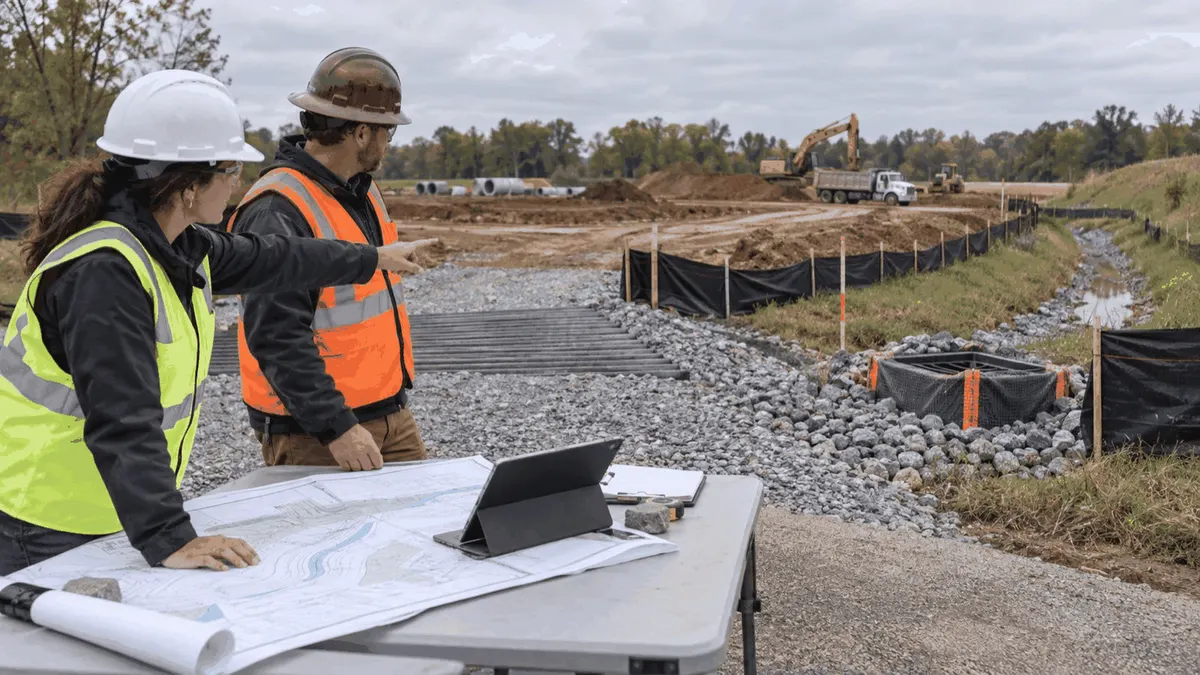
Construction stormwater planning works best when BMPs, inspections, drainage controls, and stabilization milestones match the actual phases of land disturbance.
A stormwater plan can be technically complete and still be difficult to use if it does not explain what happens first, what changes next, and who verifies each control. Municipal reviewers, developers, contractors, inspectors, and owners often need to coordinate the same site through clearing, grading, utility installation, vertical construction, paving, and final stabilization. A phase-based plan gives them a shared operating picture and helps clarify stormwater responsibilities.
Who This Affects
This issue affects developers, builders, civil engineering firms, construction managers, municipalities, inspectors, property owners, and environmental compliance teams. It is especially relevant when a project has multiple drainage areas, a tight construction footprint, steep slopes, phased permits, limited staging space, or downstream water-quality concerns.
Public works and plan-review staff can use sequencing to evaluate whether proposed BMPs are buildable and maintainable. Contractors can use it to plan mobilization, material deliveries, inspections, and stabilization. Owners can use it to understand which temporary controls remain their responsibility after a contractor changes or a phase is completed.
The Stormwater Planning Issue
Construction changes the way water moves across a site. Clearing removes vegetation, grading creates new slopes, stockpiles alter drainage, and utility trenches can become channels that concentrate runoff. A control that works during rough grading may be ineffective after a road is built or a drainage structure is connected. The plan should therefore describe the transition between phases instead of showing only a final arrangement.
Construction stormwater requirements vary by jurisdiction and permit. In many cases, a project disturbing land must address erosion and sediment control, inspections, stabilization, discharges, and documentation under an applicable NPDES construction stormwater permit or state program. This article is planning information, not legal advice or a promise of permit approval. The project team should confirm current state and local requirements before mobilization.
The sequence should connect the site plan to field actions. Before clearing, install perimeter controls where they can function without being removed by the first equipment move. Before grading, protect inlets, establish stabilized access, identify stockpile areas, and confirm where clean water will be diverted. Before utilities cross a slope, decide how trench spoils, dewatering, and temporary crossings will be managed. Before paving, review the connection between temporary controls and the permanent drainage system.
Inspections are part of the sequence, not an unrelated paperwork task. The inspection frequency, responsible person, reporting form, correction process, and closeout evidence should be clear. A finding that a silt fence has failed is useful only if the team knows who corrects it, when the correction is due, how it is documented, and whether work must pause until the issue is addressed.
What to Review Before Moving Forward
Use a phase review that asks practical questions:
- Which areas will be disturbed first, and where will runoff leave those areas?
- Which perimeter, inlet, slope, sediment-trap, or stabilized-access controls must be installed before disturbance?
- Which BMPs are temporary, which are permanent, and when does responsibility shift between them?
- Can equipment install and maintain each control without driving through or undermining it?
- Where will clean runoff be kept separate from sediment-laden runoff?
- How will stockpiles, waste, concrete washout, fueling, and material storage be managed?
- What is the plan for dewatering, trench water, pumped discharge, and unexpected groundwater?
- What inspection occurs after a rain event or when the site changes phase?
- What evidence shows that a correction was completed and the control is functioning?
- What conditions allow final stabilization, permit closeout, or removal of temporary BMPs?
Draw the sequence around work zones rather than around a generic list of BMP names. For each phase, mark the active drainage areas, flow paths, exposed soil, access routes, discharge points, and controls that must remain in place. If the next phase removes a control, show its replacement and the handoff date. This simple mapping can reveal a gap between the time a temporary measure is removed and the time a permanent measure becomes functional.
Stabilization deserves specific attention. Seed, mulch, sod, blankets, pavement, curb, inlets, channels, and permanent vegetation do not all become effective at the same time. The team should define how it will protect newly completed areas during establishment and how it will respond if a storm occurs before stabilization is adequate. A schedule that assumes perfect weather is not a robust sequence.
Inspection records should be traceable to the plan. Use consistent location descriptions, photographs where useful, weather information, findings, responsible parties, deadlines, and completion notes. If the project has multiple contractors, the owner or manager should identify who consolidates records and who communicates recurring issues to the design or permitting team.
Local drainage and downstream conditions matter too. A small discharge can still create a problem if it reaches a neighbor, a sensitive waterbody, a closed storm drain, or a roadway. The plan should show where water goes and what the team will do when the planned outlet is blocked, overwhelmed, or different from field conditions. Confirm outfall access and identify who can make a field decision when a control needs to change.
Planning, Permitting, or Compliance Support That Fits
Stormwaterplanning.us can support planning teams that need help translating site information into a usable stormwater management plan, SWPPP planning workflow, inspection structure, drainage study scope, BMP review, or municipal coordination package. The appropriate service depends on the project phase, permit context, data available, and the responsibilities assigned by the owner and jurisdiction.
Support may include reviewing whether the sequence reflects the grading plan, checking whether proposed BMPs have a maintenance path, organizing inspection records, mapping drainage areas, or preparing questions before a plan-review meeting. That work can support compliance planning and help reduce review delays, but it cannot promise permit approval, regulatory acceptance, or a particular project outcome.
Training can also help. Field crews need to know what a BMP is intended to do, how to protect it while working, and when to report failure. Supervisors and inspectors need a shared process for documenting findings and coordinating corrections. Role-based instruction is often more useful than giving every person the same general material.
Common Mistakes to Avoid
Avoid copying a BMP layout from a previous project without checking drainage, slopes, soil, access, and phase timing. Avoid removing a control because a permanent feature appears nearly complete. Avoid treating a plan set as a substitute for field inspection, especially after major grading, rain, utility work, or a change in contractor.
Another mistake is separating construction and post-construction thinking. Detention ponds, swales, inlets, permeable surfaces, rain gardens, and other permanent features need maintenance access and clear ownership. If the closeout package does not identify who maintains the feature, how it is inspected, and what records are retained, the site may inherit a long-term problem that was visible during construction.
Weather forecasting should be part of the sequence review, while recognizing that forecasts are uncertain. Before a major storm, the team can secure stockpiles, inspect diversion routes, clean protected inlets, stage repair materials, and confirm contact information. After the storm, the team can document what failed, what held, and what needs to change before the next phase continues. This turns inspection findings into planning information instead of treating every storm as an isolated event.
The plan should also account for public and neighboring impacts. Mud tracked onto a roadway, sediment entering a neighboring parcel, blocked inlets, and unsafe construction access can create complaints and additional work even when the project boundary is clear on paper. Assigning a person to check the site perimeter and communicate with the owner or municipality helps the team identify issues early and preserve useful records for project meetings.
For larger projects, a phase matrix can connect each activity to its control, inspection, responsible party, and closeout evidence. The matrix can be reviewed at the weekly coordination meeting and updated when the schedule moves. It does not replace the approved plan or permit conditions, but it gives field personnel a practical way to see what must happen before the next activity starts.
Finally, make the sequence understandable to the people doing the work. A field briefing should use the site plan, point out drainage paths, show protected inlets and access points, and explain how to report a failed BMP. When crews understand the reason for a control, they are more likely to protect it while grading, loading, trenching, and moving equipment.
Next Step
Before mobilization, compare the stormwater plan with the construction schedule and mark the controls, inspections, handoffs, and stabilization evidence required for each phase. Resolve any gap where a control is removed before its replacement functions, or where no person owns the inspection and correction decision.