
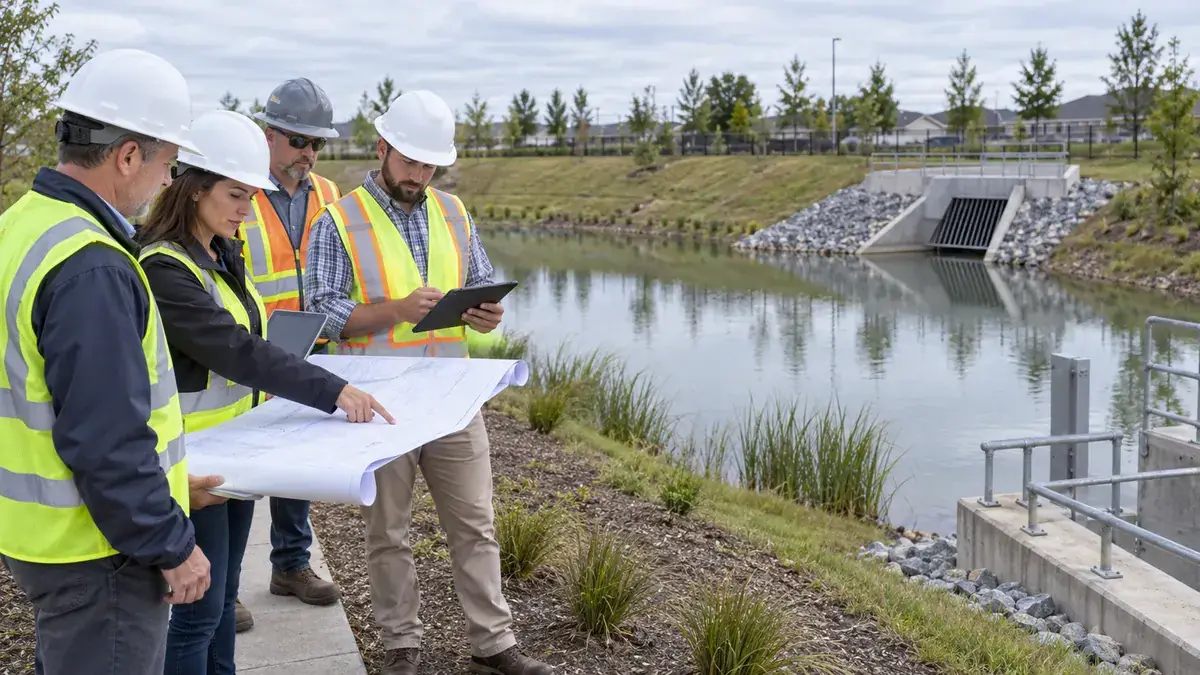
Municipal stormwater teams often know which culverts, pipes, ditches, channels, and outfalls cause recurring problems, but that field knowledge does not always turn into a clear budget request. The practical question is what to document before budget season so drainage maintenance needs can be prioritized, explained, and defended. A stormwater maintenance list is useful. A documented planning package is stronger because it connects observed conditions to risk, public service, regulatory responsibilities, and capital planning.
This issue matters to public works directors, city engineers, county road departments, stormwater managers, MS4 coordinators, planners, finance staff, and elected officials. It also matters to developers and property owners when private drainage issues connect to public infrastructure.
Culvert and outfall maintenance is not glamorous, but it can determine whether routine storms become road closures, erosion complaints, sediment problems, flooded yards, or emergency repairs.
Who This Affects
Culvert and outfall maintenance planning affects communities of every size. Small towns may rely on public works staff who know the system from experience but have limited mapping. Larger cities may have GIS inventories but still need a practical way to rank maintenance against capital improvements. Counties may face long roadside networks, aging cross drains, limited crews, and seasonal windows for work.
MS4 communities also need to think about water quality and illicit discharge responsibilities.
Outfalls are not only pipe ends. They are inspection points, maintenance indicators, and potential connections between drainage infrastructure and receiving waters. When documentation is weak, a municipality may struggle to show why one project moved ahead of another or why a recurring complaint remains unresolved.
The public is affected too. Residents usually see the symptom, not the system. They report standing water, roadway overtopping, sediment, sinkholes, erosion, or a blocked ditch. A documented planning process helps staff respond with facts instead of scattered notes. It also helps leaders explain why some work is maintenance, some is repair, and some belongs in a capital improvement plan.
The Stormwater Planning Issue
The planning issue is that culverts and outfalls sit between daily maintenance and long-term infrastructure investment. A blocked inlet may need a crew. A failing culvert may need engineering.
An eroded outfall may need stabilization and permitting review. A pipe that is too small for upstream development may need a drainage study. Without documentation, these issues compete in the same list even though they need different responses.
Good documentation starts with location and condition. Teams should know where the asset is, what it conveys, what it discharges to, whether access is public or private, what the observed problem is, and whether the concern is structural, hydraulic, environmental, or maintenance related. Photos, inspection dates, complaint history, and field notes help convert memory into a usable record.
Regulatory context should be accurate but not overstated. NPDES and MS4 programs can require communities to manage stormwater quality, inspect outfalls, address illicit discharges, and keep records that support permit responsibilities. Those requirements vary by permit and jurisdiction. A planning package should therefore support compliance planning without promising permit approval or treating every culvert repair as the same regulatory action.
Budget season adds another challenge. Decision makers need understandable categories. A list of pipe names rarely tells the story. Staff may need to show which assets create road safety concerns, which are linked to flooding complaints, which have erosion or water quality implications, which can be handled through operations, and which require design, easements, permits, or construction funding.
What To Review Before Moving Forward
- Asset location, ownership, access, receiving water, upstream drainage area, and nearby public infrastructure.
- Condition indicators such as blockage, corrosion, joint separation, crushed pipe, headwall damage, scour, sediment buildup, bank instability, or vegetation obstruction.
- Complaint history, service requests, roadway overtopping records, known flooding locations, and maintenance response dates.
- Whether the issue appears to be routine maintenance, repair, capacity, erosion control, illicit discharge, or a capital project.
- Photos from consistent angles, inspection notes, measurements, and any available GIS or mapping data.
- Potential permitting, utility, right-of-way, easement, traffic control, and environmental constraints.
- A preliminary priority ranking that separates urgent safety issues from planned maintenance and future study needs.
The review should be practical enough for public works crews and structured enough for engineers and finance staff. It does not need to become a full design report for every asset. It should give the municipality a consistent way to decide what gets cleaned, what gets repaired, what gets scoped for design, and what needs more investigation.
A useful budget-season package can also group assets by corridor, watershed, neighborhood, or maintenance route. That grouping helps staff combine field work efficiently and explain why several smaller fixes may be bundled together. It can also reveal patterns, such as repeated sediment at one outfall, damaged driveway culverts along one road, or undersized crossings in an older subdivision.
Communities should also review whether an asset has a clear maintenance owner. Some drainage features sit at the edge of public right-of-way, private property, utility easements, or homeowner association areas. Budget planning becomes difficult when ownership is uncertain. Documenting that uncertainty early lets staff resolve access and responsibility questions before crews or contractors are scheduled.
Planning, Permitting, or Compliance Support That Fits
Stormwaterplanning.us can support municipalities by helping organize drainage information into planning documents, maintenance priorities, MS4 support materials, inspection frameworks, and capital planning inputs. The right service path depends on the problem. A community with scattered complaint records may need asset mapping and prioritization. A community preparing permit documentation may need outfall screening and record support. A community facing repeated roadway flooding may need a drainage study or project scoping.
The most helpful planning support usually begins with a clear inventory of what is known and what is missing. From there, teams can decide whether to focus on maintenance plans, GIS storm drain mapping, outfall screening, erosion repairs, flood mitigation, or funding readiness. This kind of support does not guarantee regulatory acceptance or funding, but it can reduce confusion and help staff prepare better documentation.
For developers and owners, the same logic applies at a project scale. If a site depends on downstream culverts or discharges near a municipal outfall, early documentation can prevent late surprises. Drainage responsibility, maintenance access, easements, and discharge points should be reviewed before plans are submitted or construction starts.
For municipal staff, outside support can be most valuable when it turns field observations into decision-ready categories. A consultant or planning partner can help separate routine work orders from design projects, identify missing asset data, prepare maps for leadership discussions, and build a phased list that aligns with staff capacity. That organization can make budget requests more specific without overstating certainty.
Common Mistakes to Avoid
One common mistake is waiting until a failure occurs before documenting the asset. Emergency repairs are expensive, disruptive, and harder to explain. Another mistake is ranking projects based only on complaint volume. Loud complaints matter, but a low-visibility outfall with active erosion or a culvert under a critical road may deserve higher priority.
A third mistake is mixing maintenance and capital projects without labels. Cleaning sediment from an inlet is different from replacing an undersized crossing. If the list does not distinguish the type of work, budget requests can become vague and vulnerable to cuts. Municipalities should also avoid relying only on old maps. Field verification remains important because pipes, ditches, and outfalls may have changed over time.
Finally, communities should avoid making regulatory assumptions without checking the applicable permit, local standards, and site conditions. Stormwater planning should support compliance, not oversell certainty. When a project may affect waters, wetlands, easements, utilities, roads, or private property, early coordination is usually worth the time.
Next Step
Before budget season, municipalities should turn culvert and outfall concerns into a documented planning package: location, condition, photos, complaint history, maintenance status, likely project type, and priority. That package gives public works, engineering, finance, and leadership a shared basis for deciding what to maintain now, what to design next, and what to place into a capital plan.
The best time to build that package is before the first budget meeting, not after leaders ask for a number. With enough documentation, a community can explain why preventive maintenance deserves funding, why some assets need engineering review, and why stormwater work should be scheduled instead of handled only through emergency response.
A final step is to decide how the list will be kept current after the budget is approved. Crews should have a way to close completed items, add new observations, attach photos, and flag assets that need engineering review. That feedback loop keeps next year's planning from starting over and helps the stormwater program mature with each inspection season.