
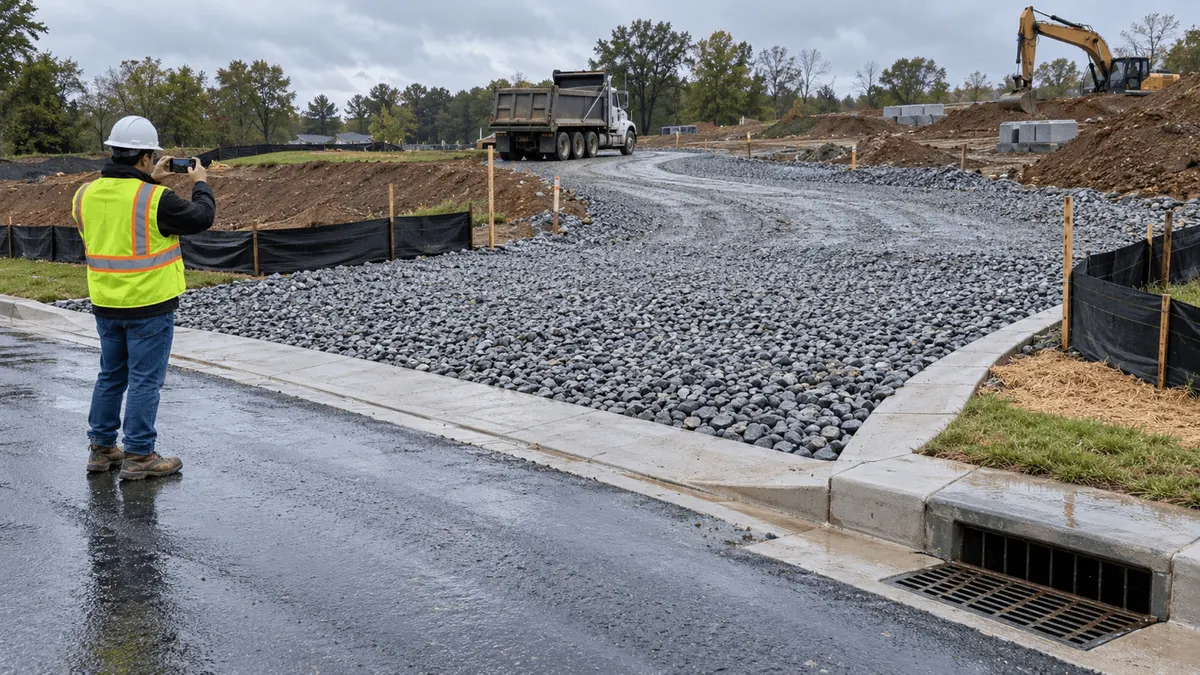
A construction entrance is a working sediment control, not a permanent fixture, and it needs planned inspection before tracked soil reaches public streets. Stone can clog, rutting can divert runoff, vehicles can bypass the stabilized route, and changing site grades can make yesterday's layout ineffective. A useful plan connects the entrance to traffic flow, drainage, sweeping, inspection records, and corrective action instead of treating it as a one-time installation.
Construction stormwater requirements vary by permitting authority, permit coverage, project size, location, and site conditions. EPA's national construction BMP resources describe stabilized construction entrances and other practices that can reduce sediment tracking and support erosion and sediment control. Project teams should confirm the current permit, SWPPP, approved plans, and state or local requirements that apply to their site.
Who This Affects
This issue affects construction operators, developers, general contractors, civil engineers, erosion-control contractors, inspectors, superintendents, delivery coordinators, utility crews, and municipalities that review or inspect land-disturbing work. It is especially important on sites with heavy truck traffic, clay soils, limited frontage, steep approaches, frequent deliveries, changing phases, or direct access to busy streets.
Owners and operators need a workable control strategy and clear responsibility. Designers need to consider location, dimensions, drainage, underlying soils, and connection to internal roads. Superintendents need to keep traffic on the controlled route. Inspectors need criteria for identifying failure and documenting correction. Drivers and subcontractors need clear directions so convenience does not create an unprotected shortcut.
Public works and transportation staff may become involved when sediment reaches a street, curb line, inlet, shoulder, or drainage system. Their concern extends beyond appearance. Tracked sediment can move with runoff, obstruct drainage, increase maintenance needs, create dust, and contribute pollutants to receiving waters. Coordination should clarify who cleans the site approach and how work near the public right-of-way will be performed safely.
The Stormwater Planning Issue
A stabilized entrance is part of a system. It cannot compensate for uncontrolled internal traffic, exposed haul roads, poor grading, overloaded trucks, missing wheel-wash procedures where needed, or runoff that flows through the entrance. If the rest of the site delivers mud to vehicle tires, the entrance may lose effectiveness quickly.
Installation details matter, but maintenance determines whether the control keeps functioning. Aggregate can become embedded in soft subgrade or packed with fine soil. Ruts can hold water and increase tracking. Edges can spread as drivers turn. Geotextile can become exposed or damaged. A wash rack can discharge turbid water without suitable collection and treatment. Sediment can build up at the street even while the entrance still appears to exist on the plan.
Site phases change the problem. Early grading may have one access point and low delivery volume. Later utility, concrete, framing, or paving work may introduce more vehicles, different turning movements, and temporary closures. A permanent driveway may be installed while adjacent areas remain unstabilized. The SWPPP and field controls should reflect the current operation, not only the original mobilization drawing.
Weather and soil conditions also change performance. Rain can soften subgrade and fill voids. Freezing and thawing can disturb stone and create pumping. Dry conditions can produce dust while leaving fine material ready to move during the next storm. Inspection should consider the condition of the entrance, internal approach, street, and nearby drainage path.
A planning process supports compliance preparation and documentation, but it does not guarantee permit coverage, agency acceptance, or a compliance outcome. The applicable permitting authority and approved project documents control. Teams should avoid copying dimensions or maintenance frequencies from an unrelated project without confirming local requirements and site conditions.
What to Review Before Moving Forward
Start with the current SWPPP, erosion and sediment control plan, permit conditions, construction drawings, and local right-of-way requirements. Identify every active entrance, temporary access, delivery gate, and location where vehicles cross disturbed soil before reaching pavement. Compare the planned route with what drivers actually use.
Location and traffic pattern
Confirm that the entrance aligns with truck turning movements, sight distance, gate operations, and internal haul routes. A control placed where loaded vehicles cannot reasonably turn may be bypassed. Review queueing so trucks do not stop on unprotected soil or block a public street. Separate employee parking or small-vehicle access if those movements create repeated tracking outside the main route.
Surface and underlying condition
Inspect aggregate depth and distribution, rutting, settlement, pumping, embedded fines, exposed fabric, edge spreading, and soft spots. Determine whether the entrance still provides a stable travel surface for the vehicles using it. Replace, refresh, regrade, or extend material when field conditions show the control is losing function, following applicable specifications.
Runoff direction and drainage
Trace water across and around the entrance. Runoff should not be unintentionally concentrated toward the street, bypass adjacent controls, or carry sediment into an inlet. Check berms, swales, culverts, inlet protection, and low points. If a wheel-wash system is used, document how wash water is contained, managed, and prevented from becoming a separate discharge problem.
Internal approach roads
Walk the route from active work areas to the exit. Stabilize or maintain internal roads where the plan requires it and address muddy transitions before vehicles reach the entrance. A short clean stone pad cannot remove unlimited soil from tires and undercarriages. Consider scheduling, load securement, and traffic routing alongside physical controls.
Street and curb line
Inspect the pavement, gutter, shoulder, sidewalk, curb ramp, and nearby inlets. Record sediment accumulation and distinguish dry sweeping needs from conditions that require a broader correction. Cleaning the street without fixing the source leads to repeated work. Do not wash sediment into a storm drain unless an approved method specifically allows and controls that activity.
Inspection and correction records
Use consistent observations such as rut depth, visible fines, bypass traffic, sediment extent, drainage condition, and maintenance performed. Photographs should show location and scale. Records should identify the responsible party, completion time, and verification. Vague notes such as "entrance okay" provide little support when conditions change.
Phase and schedule changes
Review the entrance before major delivery periods, utility tie-ins, concrete pours, paving, or gate relocations. When the route changes, update plans and field markings as required. Remove or stabilize abandoned access points so they do not remain informal paths through disturbed ground.
Planning, Permitting, or Compliance Support That Fits
A civil or stormwater professional can help evaluate entrance location, drainage, soil conditions, traffic circulation, and connections to other BMPs. This support is useful when the access has limited space, a steep grade, multiple public-road constraints, or recurring failure. The goal is a site-specific layout that crews can maintain.
SWPPP support can connect the entrance to inspection forms, maintenance triggers, responsible roles, and phase updates. A practical document explains who inspects after weather and during routine operations, who can order aggregate or sweeping, how bypass traffic is stopped, and how corrective actions are recorded. It should align with the applicable permit rather than rely on a generic checklist.
GIS or site mapping can help on large projects with multiple gates. Map each entrance, receiving street, nearby inlet, internal haul route, and responsibility zone. Time-stamped inspection points can clarify which control was active during a phase and help teams identify recurring trouble areas.
Municipal review or right-of-way coordination may be appropriate where the entrance affects public pavement, sidewalks, traffic control, or drainage assets. Early coordination can clarify responsibilities and help prepare documentation, but it does not promise a permit or approval. Project teams should confirm requirements with the authority that has jurisdiction.
Field training should focus on observable conditions and authority. Inspectors need to recognize clogging, rutting, bypass, drainage failures, and sediment leaving the site. Superintendents need authority to redirect traffic and order maintenance. Drivers and subcontractors need clear routes and reporting expectations. Sweeping personnel need a safe work plan for traffic exposure.
Common Mistakes to Avoid
Treating installation as completion
An entrance that met the drawing on day one can fail as traffic and weather change. Inspect and maintain it throughout the period it is needed.
Checking only the stone pad
The internal approach, street, curb line, inlet, and drainage route show whether the system is working. Include them in the inspection.
Allowing informal shortcuts
One delivery through an unprotected gate can track more sediment than the main entrance prevents. Block unused access and brief drivers before arrival.
Sweeping without correcting the source
Street cleaning can remove existing material, but recurring tracking may require refreshed stone, stabilized approaches, routing changes, or other controls.
Washing sediment toward a drain
Moving soil with water can create a discharge and carry pollutants into the storm system. Use approved methods and manage wash water as required.
Copying another site's specifications
Entrance needs depend on soils, vehicles, grade, drainage, permit conditions, and local criteria. Confirm the requirements for the current project.
Leaving responsibility unclear
If no one can order maintenance or sweeping, corrections wait while sediment continues to move. Assign roles, contacts, and response expectations.
Failing to update the plan by phase
Traffic patterns and access points change. Keep field controls and required documentation aligned with current construction operations.
Next Step
Walk every active vehicle exit during normal operations, preferably while deliveries are occurring. Begin inside the site, follow the haul route, cross the stabilized entrance, and continue along the receiving street to the nearest drainage feature. Photograph rutting, fines, bypass routes, sediment, and runoff paths. Compare field conditions with the current SWPPP and approved plans.
Then assign immediate cleaning, maintenance, traffic control, and documentation actions. Separate quick corrections from design or permitting questions. Set observable triggers for adding material, regrading, extending stabilization, changing routes, or increasing sweeping. Confirm those triggers and inspection frequencies against the applicable permit and local requirements.
A well-maintained entrance can reduce sediment tracking, clarify responsibilities, and support stormwater documentation. Its performance depends on the entire path vehicles travel and the team's ability to notice and correct deterioration before soil reaches the public street and drainage system.