
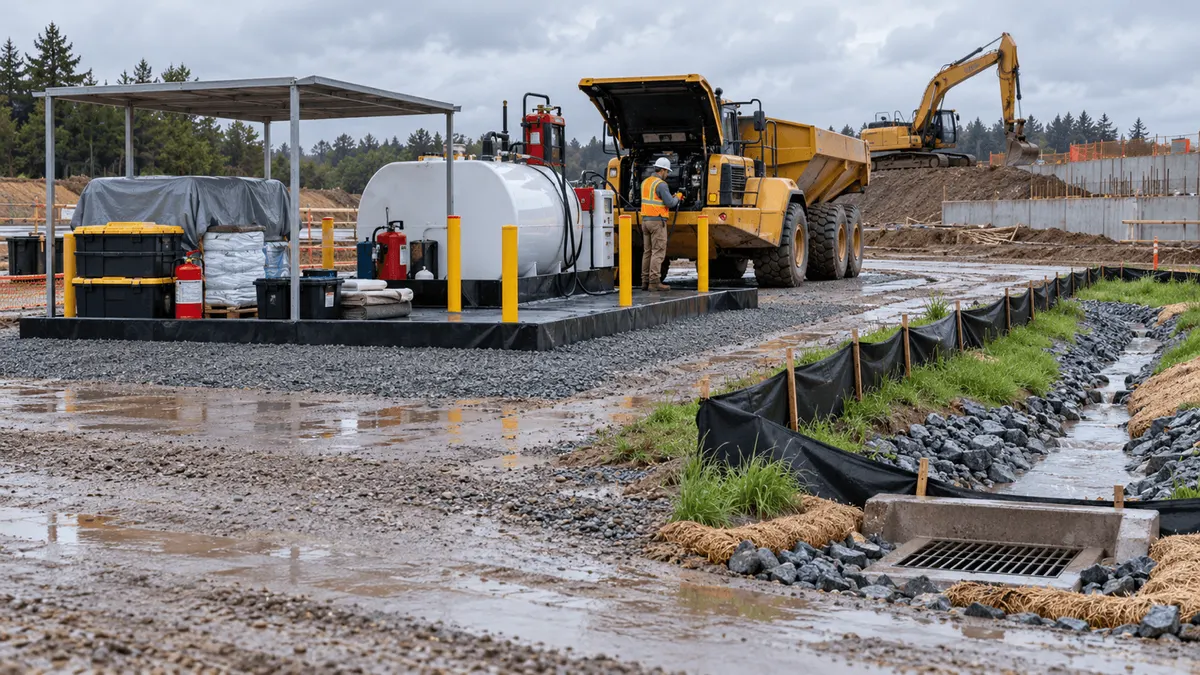
Construction fueling can become a stormwater problem quickly, so teams should set locations, controls, supplies, and reporting steps before equipment arrives. A fuel transfer that seems routine may occur beside an inlet, on compacted soil that drains toward a ditch, or during a busy shift when nobody has confirmed who owns inspection and spill response.
A practical fueling plan connects the SWPPP, site layout, permit conditions, contractor responsibilities, and field routine. It does not promise that a spill will never occur. It gives the project a defensible way to reduce exposure, identify leaks, contain material, clean up promptly, document action, and revise controls when the site changes.
Who This Affects
Owners, construction operators, general contractors, civil contractors, equipment suppliers, fuel vendors, SWPPP preparers, inspectors, and site superintendents may all influence fueling and spill controls. The issue also affects municipal reviewers and MS4 inspectors when local construction runoff programs require pollution-prevention measures and documentation.
Operators of sites covered by an NPDES construction stormwater permit should determine which permitting authority and permit apply. EPA's Construction General Permit applies only in jurisdictions where EPA is the permitting authority, while many states administer their own programs. Local grading, erosion-control, fire-code, hazardous-material, and spill-reporting requirements may also apply.
Smaller projects should not ignore the topic simply because federal construction stormwater coverage may not be required. A leak near a storm drain can still create cleanup, reporting, operational, and environmental consequences. Local rules, property-owner standards, contracts, and general pollution prohibitions can matter regardless of disturbed acreage.
Field personnel are central to success. Operators notice seepage, damaged hoses, loose caps, and stained pads before a plan reviewer does. Laborers may deploy absorbents or protect an inlet. Inspectors may discover that the designated fueling area moved. Supervisors need enough authority and information to stop fueling until a missing control is restored.
The Stormwater Planning Issue
Stormwater flows across construction sites and can pick up oil, fuel, chemicals, sediment, debris, and other pollutants. EPA's construction stormwater materials identify fuels and oils among the discharges that must be controlled, and the federal Construction General Permit includes pollution-prevention requirements for equipment and vehicle fueling and maintenance.
The planning issue is often location. A level, convenient spot for a fuel truck may also be close to a curb inlet, swale, stream buffer, temporary sediment basin, or low point. A route that is safe in dry weather may collect runoff after grading changes. A fueling area shown on an early SWPPP may be occupied by materials or become inaccessible as construction advances.
The next issue is control selection. Secondary containment, drip pans, covered storage, berms, absorbents, and spill kits can help, but their usefulness depends on placement, capacity, condition, and training. A spill kit locked in a trailer at the opposite end of the project is not the same as supplies available to the person making the transfer.
Responsibility is another common gap. The fuel vendor may control the hose, the equipment operator may watch the tank, the general contractor may maintain the site, and a subcontractor may own the machine. The SWPPP should clarify who inspects the area, who stops the transfer, who protects drainage features, who handles contaminated material, who reports a release, and who updates records.
The federal CGP is a useful planning reference, but it should not be copied as a universal permit. Its current requirements and future effective dates should be checked against the project's actual coverage. State and local permits may use different language, inspection frequencies, reporting thresholds, and documentation forms. Planning support can help prepare documentation and clarify responsibilities, but it does not guarantee a permit or compliance outcome.
What to Review Before Moving Forward
Begin with the permit and SWPPP. Identify applicable pollution-prevention requirements, prohibited discharges, inspection provisions, corrective-action procedures, recordkeeping, and spill-reporting contacts. Confirm whether a separate Spill Prevention, Control, and Countermeasure plan or other hazardous-material requirement applies. Do not assume the SWPPP replaces every other plan.
Review the current site drainage map. Locate receiving waters, storm drains, curb inlets, ditches, swales, temporary pipes, culverts, basins, slopes, and natural flow paths. Compare this map with existing grades, not just the final design. A fueling location should be evaluated for runoff arriving from upslope and for the path a release could take if containment fails.
Choose a stable operating surface with enough room for both the fueling vehicle and equipment. Consider backing movements, lighting, access, hose reach, overhead and underground hazards, fire controls, and separation from active excavation or public traffic. Stormwater controls should complement rather than create a vehicle or worker safety hazard.
Assess containment and cover. The appropriate configuration depends on how fueling occurs, the volume handled, the surface, equipment type, and applicable requirements. Controls may include spill berms, containment pallets, portable basins, curbing, drip pans, absorbent pads, and covers. The team should know how rainwater inside containment will be inspected and managed without creating an uncontrolled discharge.
Inventory response supplies. Spill kits should match the liquids and likely quantities on site, and employees should know their locations. Supplies may include compatible absorbent pads or socks, drain covers, overpack containers, tools, disposal bags, personal protective equipment, and contact information. Used absorbents and contaminated soil need a defined storage and disposal route consistent with applicable requirements.
Inspect vehicles and equipment before they reach the pad. Leaking hydraulic lines, damaged fuel caps, loose fittings, and overfilled tanks can create pollution away from the designated location. Drip pans or absorbents may be appropriate under leaky equipment while repairs are arranged, but they should not become a substitute for eliminating a continuing leak.
Plan the transfer procedure. Shut down equipment when required, prevent overfilling, maintain attendance at the transfer point, secure caps, and verify that hoses and nozzles are in serviceable condition. Mobile fueling outside the designated area should require defined conditions and equivalent controls rather than becoming an undocumented convenience.
Coordinate with vendors and subcontractors. Provide the approved route and location before arrival. Explain stop-work authority, emergency contacts, prohibited washing, and waste handling. Contracts can assign tasks, but the site operator should still verify that the field practice matches the SWPPP and permit responsibilities.
Set inspection triggers. Routine stormwater inspections should include the fueling area, but additional checks may be needed after a delivery, a reported leak, heavy rain, relocation, vandalism, or a change in drainage. The record should identify stains, damaged containment, missing supplies, accumulated rainwater, full waste containers, and evidence that fueling occurred elsewhere.
Planning, Permitting, or Compliance Support That Fits
SWPPP support can translate permit language into a usable site plan, inspection checklist, corrective-action log, and responsibility table. The document should show the fueling area and nearby drainage controls, describe pollution-prevention practices, identify response contacts, and explain how changes are recorded. A drawing and a field narrative are most useful when they agree.
Construction sequencing support can help move the fueling area deliberately. The project may need one location during mass grading, another during utility work, and a final location during paving. Each move should trigger a drainage review, control installation, SWPPP update when required, and briefing before the first transfer.
Municipal or owner review support can focus on consistency. Reviewers can compare the plan, narrative, details, and inspection forms for the same assumptions. Clear submittal requirements can reduce repeated comments and help contractors understand expectations before mobilization. This can reduce review delays, but it cannot promise approval.
Compliance planning can connect fuel controls with other construction activities. Concrete washout, equipment washing, material storage, waste management, dewatering, dust control, and stabilization may use the same limited site area. A coordinated layout prevents one control from discharging into another or blocking inspection access.
Training support should be role-based. Fuel vendors need the transfer and notification procedure. Equipment operators need leak-reporting and shutdown steps. Inspectors need deficiency categories and corrective-action deadlines. Supervisors need the permit contacts and authority to suspend fueling. Everyone should know that hosing a contaminated surface toward drainage is not an acceptable cleanup method.
Common Mistakes to Avoid
One mistake is selecting the fueling area from an old plan without walking the current site. Temporary drainage and access change quickly. The approved location may now drain toward a newly installed inlet or sit below an unstabilized slope.
Another mistake is using sediment controls as spill controls. Silt fence, inlet protection, and sediment basins are designed for sediment-related purposes and may not contain dissolved or floating petroleum products. Pollution prevention should emphasize keeping the release from occurring and reaching stormwater, with response controls suited to the material.
A third mistake is storing a spill kit without checking it. Supplies can be used, damaged, saturated by rain, or incompatible with the liquid. Inspections should verify accessibility, contents, labeling where required, and replacement responsibility.
Projects also fail when mobile fueling occurs wherever equipment stops. If remote fueling is necessary, the plan should define approved locations or conditions, drainage review, portable containment, response supplies, and documentation. An exception should not erase the protection expected at the main pad.
Another mistake is washing a spill away. EPA's CGP materials call for dry cleanup measures and elimination of the source rather than hosing a contaminated surface. The response should protect inlets and flow paths, recover material where possible, manage contaminated waste, and follow applicable notification requirements.
Incomplete records create a final problem. A note saying spill cleaned does not identify the source, amount estimate, affected area, drainage exposure, material recovered, notifications, waste destination, or preventive correction. The record should be proportional to the incident and consistent with permit and other reporting duties.
Next Step
Before the next fuel delivery, walk the site with the superintendent, SWPPP contact, and person responsible for fueling. Stand at the proposed location and trace both incoming stormwater and the worst-case release path. Confirm containment, drain protection, lighting, traffic movement, spill supplies, waste storage, and communication.
Then run a short tabletop scenario. Assume a hose connection leaks during light rain and fuel moves beyond the pad. Ask who stops the source, who protects the inlet, who retrieves supplies, who makes required notifications, who manages waste, and who documents corrective action. Close any unanswered responsibility before equipment arrives.
Sources
United States Environmental Protection Agency, 2022 Construction General Permit, https://www.epa.gov/npdes/2022-construction-general-permit-cgp
United States Environmental Protection Agency, Stormwater Discharges from Construction Activities, https://www.epa.gov/npdes/stormwater-discharges-construction-activities
United States Environmental Protection Agency, Developing a Stormwater Pollution Prevention Plan, https://www.epa.gov/npdes/developing-stormwater-pollution-prevention-plan-swppp
United States Environmental Protection Agency, National Menu of Best Management Practices for Stormwater Construction, https://www.epa.gov/npdes/national-menu-best-management-practices-bmps-stormwater-construction