Removing inlet protection too early can expose a storm drain to sediment, while leaving it too long can obstruct flow and hide an unfinished site condition. The practical decision is not based on the calendar alone. It should connect upstream stabilization, remaining construction activity, drainage performance, sediment cleanup, permanent controls, permit conditions, and a documented field inspection.
Who This Affects
This issue affects construction operators, developers, general contractors, SWPPP inspectors, civil engineers, erosion-control subcontractors, public works reviewers, and owners preparing to close a project. It also matters to maintenance teams receiving permanent drainage assets. Each party may see a different piece of the transition from temporary sediment control to an operating post-construction system.
Requirements vary by permitting authority and project. EPA's Construction General Permit applies only where EPA is the NPDES permitting authority, while many states and local programs use their own permits, specifications, and final-stabilization definitions. Project teams should use the permit that covers the site, the approved SWPPP, civil plans, and local requirements. A general field practice cannot replace those documents.
The Stormwater Planning Issue
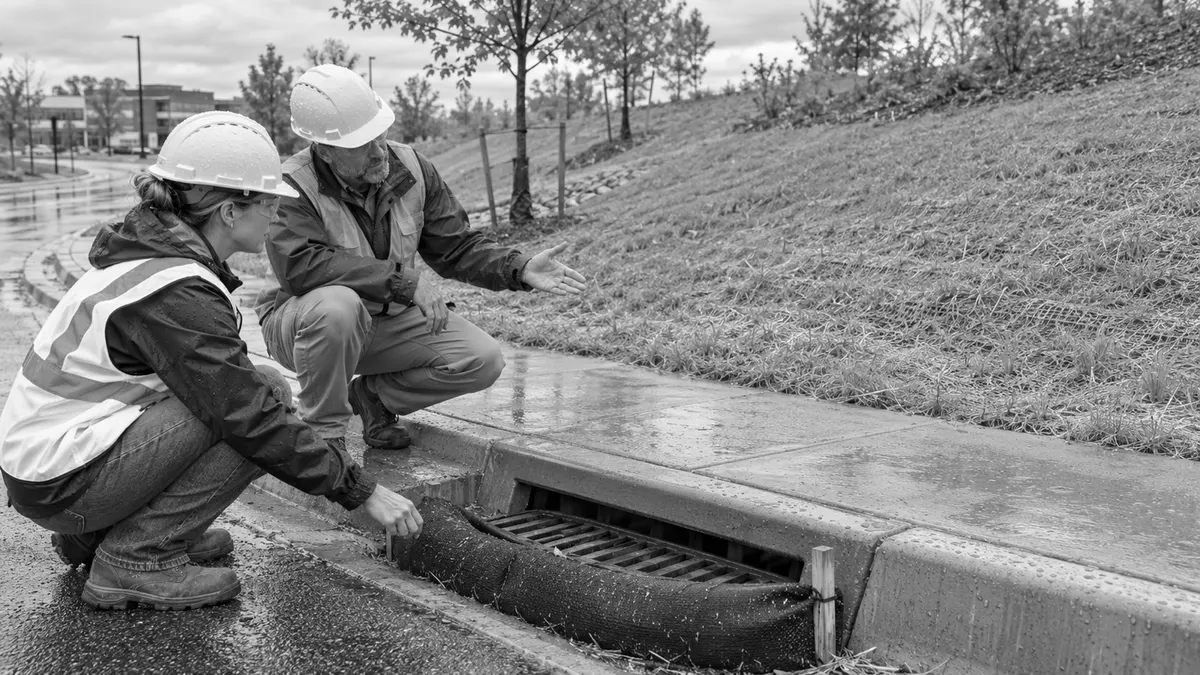
Inlet protection is designed to keep sediment from entering a storm drain during land disturbance. EPA's 2022 Construction General Permit requires protection for qualifying inlets and calls for cleaning, removal, or replacement as sediment accumulates, filters clog, or performance is compromised. The same permit framework requires controls to remain effective during permit coverage. Removing a device because paving is complete may be premature if exposed soil, utility work, landscaping, or material staging still drains to that inlet.
Leaving a temporary device indefinitely creates a different problem. A clogged filter can pond water in travel areas, divert flow around the inlet, contribute to erosion, or create maintenance and traffic concerns. Temporary materials can deteriorate, detach, or conceal sediment that needs removal. Once the tributary area satisfies the applicable final-stabilization criteria and temporary controls are no longer needed, the project should follow its permit and plan for removal, cleanup, and repair.
The decision should be made by drainage area rather than by appearance at the grate. An inlet may look clean while receiving runoff from an unfinished slope around a corner. Conversely, a stabilized subarea may be ready for a transition even while work continues elsewhere, if the permit and phasing plan support that approach and no active disturbed area drains to it. A current drainage map helps inspectors connect the inlet to actual upstream conditions.
What to Review Before Moving Forward
First, delineate the contributing area. Confirm curb grades, swales, temporary diversions, roof leaders, trench drains, and overland flow paths. Construction can change drainage from the design assumptions, especially after curbs, pavement, or grading are installed. Walk the route during or soon after rainfall when feasible. Note whether runoff bypasses the device, ponds in the street, or reaches the inlet from an area not shown on the current map.
Second, verify stabilization across the full contributing area. Inspect seeded areas, sod, mulch, erosion-control blankets, stone, pavement, landscaping, and other permanent stabilization measures against the applicable permit criteria. Look for bare strips along curbs, utility patches, washouts, rills, unstabilized stockpile locations, and disturbed access routes. A broad view from the inlet should be supplemented by closer checks at the upstream sources most likely to release sediment.
Third, identify work that can disturb the area again. Punch-list grading, utility connections, sign installation, tree planting, sidewalk repair, irrigation work, and building closeout can reopen soil. If future activity will drain to the inlet, the team may need to keep effective protection, replace it with a better-suited control, or sequence removal after that work. The SWPPP should reflect the current phase rather than a phase that is merely expected to begin soon.
Fourth, inspect the device and adjacent pavement. Record sediment depth, clogging, tears, displaced material, undercutting, bypass, ponding, and traffic damage. Remove accumulated sediment using methods that keep it from being washed into the drain. Sweeping and vacuuming may be appropriate for paved surfaces, subject to project procedures and disposal requirements. Do not lift a device in a way that dumps trapped material through the grate.
Fifth, check the drainage system downstream where access and safety allow. The inlet box, connecting pipe, outlet, or receiving treatment practice may contain construction sediment even when the surface looks complete. Coordinate with the owner and follow confined-space restrictions where applicable. Evidence of sediment inside the system may require cleaning and a source review before the temporary surface control is removed.
Sixth, confirm permanent stormwater controls are installed and operational. Bioretention areas, detention outlets, proprietary structures, swales, infiltration areas, and other permanent BMPs should be protected from construction damage and prepared for turnover. Removing inlet protection should not transfer untreated construction runoff into a permanent practice that is clogged, incomplete, or still being used as a sediment trap contrary to the plan.
Seventh, read the exact closeout requirements. The project may require a final stabilization inspection, photographs, certification, correction of erosion, removal of temporary controls, and a Notice of Termination or local closeout submission. Permit coverage usually does not end simply because the contractor demobilizes. Responsibilities should remain assigned until the required termination or transfer steps are complete.
Planning, Permitting, or Compliance Support That Fits
A useful removal plan can be short. List each inlet, its contributing area, current protection type, stabilization status, remaining work, inspection date, sediment cleanup need, planned removal date, and responsible party. Link the list to a marked drainage map. This supports compliance planning by making the decision traceable and clarifying which inlets still need protection.
For phased projects, establish release zones. A zone can be considered for transition only after the team verifies upstream stabilization, remaining disturbance, device condition, downstream readiness, and permit criteria. If one inlet receives runoff from multiple zones, the least stable contributing area usually controls the timing. The map should show temporary diversions that change this relationship.
Coordinate civil, landscape, utility, and closeout schedules. A landscape crew may need an inlet protected during final soil work even though the paving contractor is ready to remove traffic devices. A utility crew may reopen a stabilized strip after the final inspection. A brief coordination meeting can reduce reinstallation, clarify responsibilities, and help prepare documentation without promising approval or a particular permit outcome.
Field records should capture the facts used in the decision. Include date, inspector, weather, inlet identification, contributing-area status, remaining work, device condition, sediment removal, downstream observations, photographs where appropriate, and final action. If protection remains, record maintenance and the next trigger for review. If it is removed, note any repair or stabilization completed around the inlet.
The record should also identify where removed materials and captured sediment went. Disposal notes, contractor tickets, or a concise site log can show that material was managed instead of shifted to another drainage path. If the device will be reused, inspect and store it so damaged material is not installed at the next phase.
When a site is covered by a state or local permit, compare the federal examples with the controlling language rather than assuming they are identical. Definitions of final stabilization, inspection frequency, vegetation coverage, seasonal stabilization, and termination can differ. Qualified stormwater professionals can help teams interpret site-specific documents, update plans, and prepare records, but they cannot guarantee agency approval or compliance outcomes.
Common Mistakes to Avoid
One common mistake is removing every device on the same day. Drainage areas stabilize at different times, and remaining work varies across a site. A location-based review is more defensible than a blanket date. Another mistake is judging stabilization from the street. Thin vegetation, bare utility cuts, and eroding slopes may be visible only from within the contributing area.
Another mistake is leaving protection in place as a substitute for stabilization. Inlet protection captures some sediment; it does not stabilize exposed soil or replace upstream erosion controls. Teams should correct the source, maintain the device, and follow stabilization deadlines. A device packed with sediment is not evidence that the control is succeeding without maintenance.
Teams also overlook the sediment released during removal. Pulling a filter bag or fiber roll across a grate can send the captured load directly into the system. Plan access, lifting, containment, sweeping, and disposal before disturbing the device. Inspect the grate and adjacent gutter after removal and correct any bare soil created by stakes or excavation.
Finally, do not close records before the field transition is verified. A checklist signed from the office can miss a re-disturbed slope or clogged downstream structure. The closeout record should describe actual conditions and any follow-up. If the inspection shows the site is not ready, documenting that finding helps prepare the next action and can reduce review delays.
Next Step
Select the inlets being considered for removal and trace every current flow path to them. Compare field stabilization and remaining work with the controlling permit and SWPPP, clean accumulated sediment, verify permanent drainage features, and document the decision inlet by inlet. Keep effective controls in place where the evidence is incomplete, then schedule a clear reinspection trigger.
Sources
United States Environmental Protection Agency, 2022 Construction General Permit: https://www.epa.gov/system/files/documents/2024-12/permit-markup-2022-cgp-modification.pdf
United States Environmental Protection Agency, Developing Your Stormwater Pollution Prevention Plan, A Guide for Construction Sites: https://nepis.epa.gov/Exe/ZyPURL.cgi?Dockey=60000FNM.TXT
United States Environmental Protection Agency, Construction General Permit Resources, Tools, and Templates: https://www.epa.gov/npdes/construction-general-permit-resources-tools-and-templates