
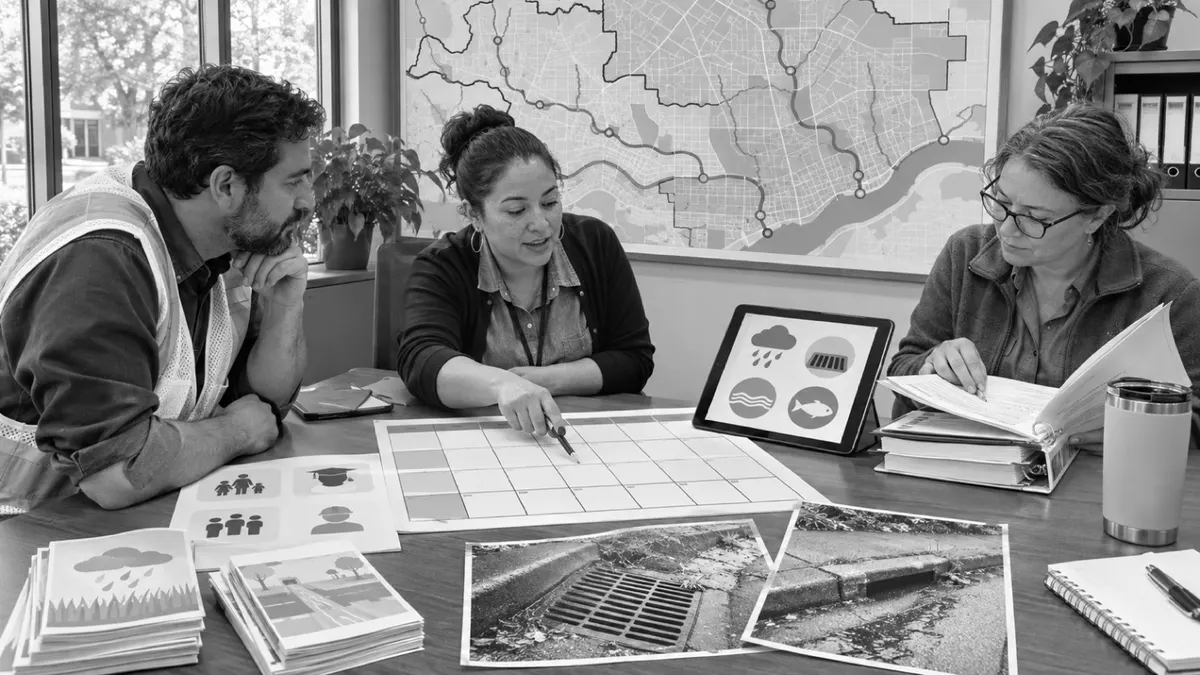
MS4 public education records work best when they connect priority audiences, local stormwater issues, planned activities, delivery evidence, and follow-up. A folder of brochures or social posts may show effort, but it may not explain why an activity was selected or how the program evaluated whether its message reached the intended group.
Who This Affects
This issue affects municipal separate storm sewer system operators, stormwater program managers, public information staff, public works departments, environmental educators, schools, watershed partners, contractors, permit coordinators, and consultants supporting annual reports or program evaluations. It also affects departments that communicate with residents, businesses, developers, landscapers, pet owners, vehicle operators, and municipal employees about behaviors that can affect stormwater.
Small teams are especially likely to hold records in several places. A communications office may track website and social media activity, public works may host events, a contractor may print materials, and a watershed group may report attendance. A useful program record connects these pieces without requiring every partner to use the same software.
The Stormwater Planning Issue
Federal small MS4 requirements include a public education and outreach program concerning stormwater impacts. The specific permit, state program, and local priorities shape what the operator must do and document. The practical planning challenge is to turn a broad communication duty into activities tied to local pollutants, behaviors, audiences, and evidence.
Distribution counts alone have limits. Printing 2,000 flyers does not establish that the intended audience received or understood them. A social media impression does not show that a resident changed how fertilizer, leaves, pet waste, vehicle fluids, or household chemicals were handled. Records should distinguish outputs, such as materials distributed, from outcomes or indicators that help the municipality evaluate reach and response.
Audience selection matters because one message rarely fits everyone. Homeowners, renters, property managers, contractors, restaurant staff, automotive businesses, students, and municipal crews have different decisions and information channels. The program should identify who can influence a priority issue and what action the communication is intended to support.
Local context should drive the message. Dry-weather outfall observations, complaint data, catch-basin debris, illicit discharge investigations, nutrient concerns, floatables, construction issues, or seasonal leaf accumulation may point to education needs. Using local evidence does not guarantee a behavior change, but it provides a defensible connection between the activity and the stormwater program.
Record design also affects annual reporting and permit review. When the activity log, invoices, screenshots, attendance sheets, partner reports, and evaluation notes use different names and dates, staff may spend weeks reconstructing what happened. A consistent record can reduce review delays, clarify responsibilities, and support compliance planning without promising a particular compliance outcome.
What to Review Before Moving Forward
Begin with the applicable MS4 permit, program plan, prior annual reports, state guidance, and any commitments made during previous reviews. List the required audiences, topics, frequencies, measures, and record-retention expectations. Separate explicit permit conditions from local enhancements so staff understand which elements are mandatory and which are program choices.
Review the municipality's priority stormwater issues and available evidence. Map complaints, spills, outfalls, land uses, impaired waters, maintenance findings, and seasonal patterns where useful. Ask which audience can influence each issue and what behavior is realistically within that audience's control. Avoid selecting a topic only because a generic brochure is already available.
Inventory existing communication channels. Utility bills, websites, social platforms, neighborhood meetings, schools, libraries, permit counters, inspections, contractor orientations, community events, and partner newsletters may reach different groups. Record accessibility needs, translation needs, distribution timing, geographic reach, and who controls each channel.
Define the activity before it launches. Record the target audience, priority issue, intended action, message, delivery method, schedule, owner, partner, estimated reach, evidence to retain, and measure to review. A short activity brief makes later reporting more reliable and helps staff notice when delivery changes from the plan.
Choose measures that match the activity. Possible output measures include mail pieces sent, event attendance, webpage visits, video views, training completions, pledge cards, or materials requested. Follow-up indicators might include survey responses, repeat participation, reduced contamination at a collection point, fewer recurring complaints, or better inspection findings. Each measure has limitations and should be described honestly.
Plan privacy and data handling. Sign-in sheets, online forms, photographs, student activities, and partner lists may contain personal information. Collect only what the program needs, follow municipal retention and privacy practices, and avoid publishing identifying information without proper authority. Aggregated counts may be sufficient for many reporting purposes.
Review accessibility and language needs before production. Printed material, videos, web pages, presentations, and event displays should be usable by the audiences the municipality intends to reach. Translation should preserve the stormwater action and local contact information rather than rely on an unexplained literal conversion. Captions, readable contrast, alternate formats, and accessible meeting locations may improve participation. Record which versions were delivered, where they were used, and how staff verified the final material. This documentation helps explain reach and prevents an outdated or incomplete version from being counted as the current activity.
Planning, Permitting, or Compliance Support That Fits
A simple activity register can serve as the program backbone. Useful fields include activity identifier, permit year, target audience, topic, priority pollutant or behavior, delivery channel, planned date, actual date, department, partner, geographic area, output measure, follow-up indicator, evidence location, cost, and reviewer notes. The register should point to supporting files rather than duplicate every file.
Use controlled names for audiences and topics. If one department records residents, another general public, and a third households, program totals may be inconsistent. A short reference list supports reliable filtering while still allowing notes for a specialized group. The same principle applies to activity types and geographic areas.
Store evidence that shows delivery. A final brochure file, distribution list, dated webpage capture, event agenda, attendance count, invoice, photo, partner confirmation, or platform report may be appropriate depending on the activity. Drafts alone do not show that the message was delivered. Keep evidence proportionate and avoid collecting files that no one will use.
Build review into the calendar. Quarterly or seasonal checks can confirm that planned audiences are being reached, evidence is complete, measures are understandable, and responsibilities have not stalled. Waiting until the annual report may leave too little time to replace a canceled event, retrieve partner data, or correct an activity code.
Connect education with other minimum control measures when appropriate. Illicit discharge staff may identify recurring messages. Construction inspectors may see common contractor misunderstandings. Municipal operations staff may need internal reminders that also support public examples. These connections can improve consistency, but the record should still identify which program element and audience each activity serves.
Evaluation should lead to a decision. If a channel reaches very few intended users, the program may adjust timing, format, partner, or message. If participation is high but a recurring field problem remains, the municipality may test a more specific action or combine education with operational or enforcement tools. Record the decision and its basis instead of presenting every metric as success.
Qualified planning support can help organize permit commitments, create the activity register, map audiences, establish evidence standards, reconcile annual-report totals, and prepare documentation for review. This support can clarify responsibilities and help reduce review delays, but it cannot promise permit approval, a finding of compliance, funding, or a particular environmental outcome.
Common Mistakes to Avoid
One mistake is counting materials before they are distributed. Printing is production, not delivery. Record what was actually mailed, handed out, posted, presented, or otherwise made available, and preserve the evidence used for the count.
Another mistake is using the same general message every year without reviewing local needs. Repetition can be valuable, especially for seasonal behaviors, but the program should explain why the audience, timing, and content remain appropriate. A copied activity with no review may not address a changing priority.
Teams should avoid mixing estimates and verified counts without labels. Event attendance may be estimated while email delivery is system-generated. Both can be useful if the record identifies the method. False precision makes later comparisons harder, not easier.
Do not let partner activity disappear from the municipal file. If a watershed group or contractor delivers the work, define what report or evidence it will provide and when. The MS4 operator should be able to connect the partner's activity to its own program plan and reporting period.
Avoid relying only on online engagement. Digital channels can be efficient, but some audiences may lack access, use different languages, or respond better to direct contact. Channel selection should follow the target audience and intended action rather than convenience alone.
Next Step
Select one recent public education activity and trace it from permit commitment to audience, local issue, message, delivery evidence, measure, and follow-up decision. Any broken link reveals a practical improvement for the activity register or file structure.
Then schedule a short cross-department review before the next reporting deadline. Confirm planned activities, owners, partner deliverables, evidence locations, and measures. A small, repeatable review process can make the program record more useful throughout the year and easier to explain during annual reporting or an audit.
Sources
Electronic Code of Federal Regulations, 40 CFR 122.34, Permit Requirements for Regulated Small MS4s https://www.ecfr.gov/current/title-40/chapter-I/subchapter-D/part-122/subpart-B/section-122.34
United States Environmental Protection Agency, Stormwater Phase II Final Rule Fact Sheet 2.3, Public Education and Outreach https://www.epa.gov/sites/default/files/2015-11/documents/fact2-3.pdf
United States Environmental Protection Agency, National Menu of Best Management Practices for Stormwater https://www.epa.gov/npdes/national-menu-best-management-practices-bmps-stormwater