
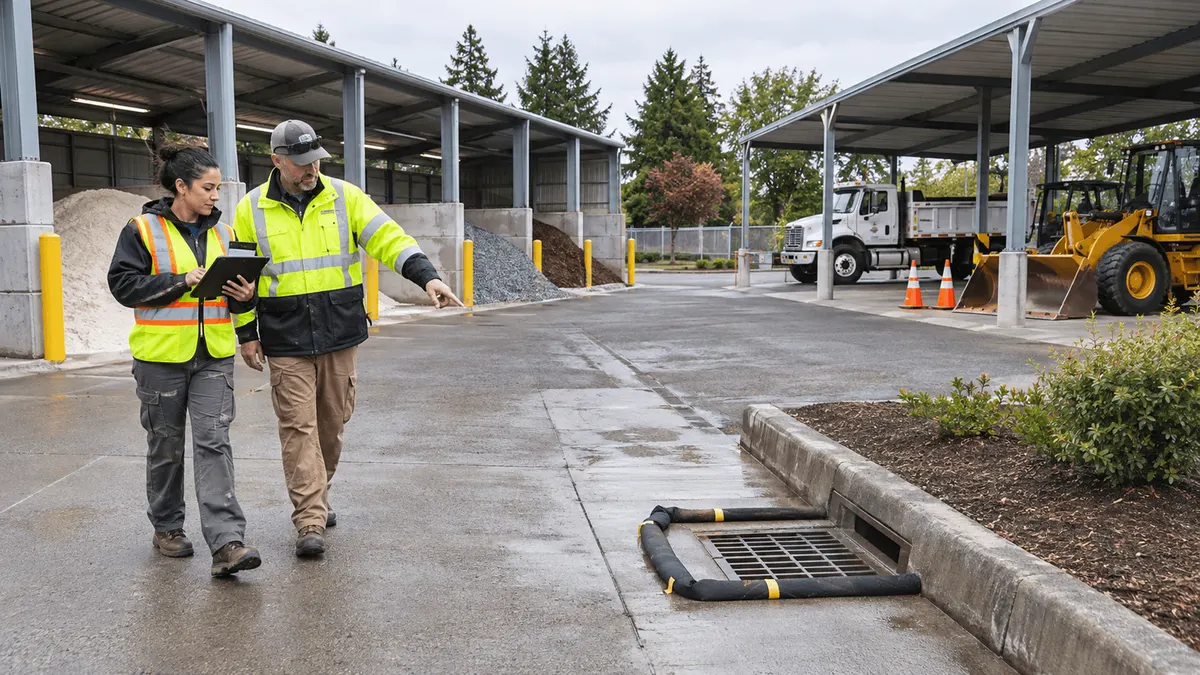
Routine municipal yard inspections can reveal small operational problems before rain carries sediment, fluids, trash, or wash water into the storm system. A useful inspection connects what staff observe on the ground with written procedures, maintenance responsibilities, training, corrective work, and the records used to support the MS4 program.
Public works yards combine many activities in a compact area. Vehicles are fueled and repaired, equipment is washed, aggregate and deicing material may be stored, waste is staged, landscaping supplies are handled, and crews move between indoor bays and outdoor work areas. Each activity can create a different pathway to an inlet, ditch, outfall, or receiving water.
The purpose of planning is not to produce a perfect checklist that looks the same in every community. It is to establish a repeatable review that reflects local operations, the applicable permit, site drainage, seasonal work, and the pollutants actually present. Good records can clarify responsibilities, support compliance planning, and help managers direct limited time toward conditions that matter most.
Who This Affects
Municipal stormwater coordinators often organize the program, but they cannot see every daily activity at a yard. Fleet managers, public works supervisors, mechanics, equipment operators, parks staff, facility personnel, solid-waste teams, and contractors all influence whether materials contact stormwater. The inspection process should therefore match operational ownership rather than treating stormwater as one person's paperwork.
MS4 permittees may need pollution prevention and good-housekeeping procedures for municipal operations. EPA identifies municipal activities such as fleet and building maintenance, landscaping, infrastructure work, materials storage, and storm-drain maintenance as potential sources of stormwater pollution. The specific obligations, frequencies, documentation, and corrective-action timelines depend on the applicable permit and other requirements.
Facility managers benefit from an inspection that distinguishes routine housekeeping from capital needs. A missing container lid can often be corrected immediately. A failing wash rack, deteriorated pavement, undersized secondary containment, or drainage configuration that directs runoff through a material area may require budgeting, design, or construction. Combining both types in one undifferentiated list can leave larger risks open while staff repeatedly close minor items.
Contractors should be included when they wash vehicles, store materials, service equipment, handle waste, or perform maintenance on municipal property. Contract language and pre-work coordination can clarify who supplies controls, who inspects them, who responds to spills, and who keeps records. The municipality still needs visibility into work that could discharge to its system.
The Stormwater Planning Issue
The planning issue is the connection between operations and drainage. A container can be neatly labeled and still be placed where runoff reaches an inlet. A maintenance bay can be indoors and still drain through a doorway. A covered stockpile can shed clean roof water onto loose material. An inspection should follow the likely movement of water and pollutants instead of looking only for obvious spills.
Start with a current site map or simple drainage sketch. Show buildings, paved and unpaved areas, inlets, ditches, swales, outfalls, wash areas, fueling points, maintenance bays, material storage, waste containers, snow storage, and spill-response supplies. Note drainage divides and any places where runoff leaves municipal property. Field staff can often identify connections or low points that are absent from older plans.
Then connect activities to potential pollutants. Vehicle work can involve fuel, oil, antifreeze, brake fluid, batteries, solvents, and metal debris. Material yards can release sediment, salt, nutrients, pesticides, trash, or fine aggregate. Washing can carry detergents, dirt, metals, and fluids. Waste areas can produce litter or contaminated runoff when containers are open, damaged, or overfilled.
Seasonal operations change the picture. Winter can add salt storage, brine equipment, snow piles, and frozen drains. Spring may bring sweeping debris and catch-basin cleanout material. Summer landscaping adds soil amendments, pesticides, and irrigation. Storm preparation can concentrate equipment outdoors. The inspection calendar should reflect those cycles instead of relying only on an annual visit during ideal weather.
The plan also needs a method for corrections. Observations should be assigned to a responsible role, given a practical priority, and tracked to closure. If a condition cannot be corrected immediately, interim measures may be needed. A photograph of a problem without an owner or follow-up date is an incomplete record.
What to Review Before Moving Forward
Review storage first. Check whether liquids, powders, aggregate, deicing material, soil, compost, paint, chemicals, and maintenance supplies are covered or otherwise protected as required by the facility's procedures and permit. Look for damaged containers, staining, corrosion, open lids, incompatible storage, and exposure at loading points. Confirm that secondary containment is intact, kept free of unnecessary water, and sized or managed under applicable requirements.
Inspect fueling and maintenance areas for drips, stained pavement, leaking hoses, unprotected drains, used-fluid containers, and poor parts storage. Verify that absorbents and response tools are available and that staff know how to report and manage a release. Routine dry cleanup can be more effective than washing residues toward a drain. Procedures should address collected absorbent and other waste after a response.
Review vehicle and equipment washing. Determine where wash water goes and whether the actual practice matches the written procedure. Employees should understand that a storm drain is not a disposal route. If washing occurs at a designated facility, inspect curbs, sumps, hoses, signs, and connections. If mobile washing is allowed, define where it can occur and how wash water and residues are managed.
Walk the perimeter and drainage path. Look for sediment tracking, eroded shoulders, damaged pavement, clogged inlets, illicit hoses, bypassed controls, pooled liquids, and runoff moving through material areas. Inspect inlet protection or treatment devices for damage and accumulated material. Confirm that cleaning methods do not push pollutants farther into the system.
Check waste and recycling areas for open dumpsters, damaged compactors, leaking containers, loose litter, and poor placement. Evaluate whether rainfall can contact waste or whether liquids can reach the drainage system. Include scrap metal, street-sweeping debris, catch-basin material, leaves, and collected sediment because these operational wastes may be handled differently from ordinary trash.
Review spill prevention and response readiness. Staff should be able to identify reporting contacts, protect nearby drains when safe to do so, select appropriate materials, and document the event. Supplies should fit the products present and remain accessible. A kit locked in another building or buried behind stored equipment may not support a timely response.
Compare the field inspection with training and maintenance records. If the same issue appears repeatedly, the cause may be an unclear procedure, insufficient storage, poorly located equipment, or missing supervision rather than an employee simply forgetting a rule. Trends can justify changes to layout, procurement, schedules, or training.
Planning, Permitting, or Compliance Support That Fits
A basic facility assessment is useful when a municipality has no current drainage map or inventory of operations. The assessment can document activities, pollutants, pathways, existing controls, and obvious gaps. It supports compliance planning by creating a shared baseline, but it should be checked against the current MS4 permit and local procedures.
Standard operating procedures fit recurring work such as fueling, vehicle maintenance, washing, material handling, snow and ice control, street sweeping, inlet cleaning, spill response, and waste storage. Effective procedures name the responsible role, describe the control steps, address unusual conditions, and identify required records. They should be short enough for supervisors and crews to use.
An inspection form should be tailored to the site. A concise route-based checklist can guide the inspector from storage to maintenance, washing, waste, drainage, and the perimeter. Include space for location, observation, immediate action, responsible person, target date, verification, and closure. Drop-down defect codes can help summarize trends, but narrative detail and photographs are still valuable for unusual conditions.
GIS or asset-management support can connect yard features to the larger storm system. Mapping inlets, conveyances, outfalls, and facility areas can help teams understand where a release could travel and which downstream assets need protection or inspection. This work can clarify responsibilities and support emergency planning without promising a particular permit or compliance outcome.
Engineering support may fit when the inspection finds recurring runoff through storage areas, failing pavement, inadequate containment, wash-water problems, or drainage that cannot be corrected through housekeeping. A scoped evaluation can compare alternatives, define design criteria, and prepare documentation for review. Early coordination with the permitting authority can reduce review delays, but it does not guarantee approval.
Training should match roles. Mechanics need controls for fluids, parts, cleanup, and waste. Operators need fueling, washing, loading, and spill-reporting steps. Supervisors need inspection, corrective-action, and recordkeeping expectations. Stormwater coordinators need enough operational knowledge to distinguish a paperwork gap from a condition that requires immediate field action.
Common Mistakes to Avoid
One mistake is inspecting only during dry weather and never asking what happens during rain. Dry-weather visits are useful for observing operations, but inspectors should look for flow marks, sediment fans, staining, and drainage connections that reveal wet-weather behavior. A visit during or shortly after a safe rainfall can provide different evidence.
Another mistake is using one generic checklist for every municipal facility. A small administrative building does not present the same activities as a fleet yard, transfer station, golf course, or salt-storage facility. A common program framework is helpful, but site-specific items make the inspection meaningful.
Teams also close findings when a work order is opened rather than when the condition is corrected. The record should distinguish assignment, temporary control, completed work, and verification. If the repair changes drainage or facility layout, update maps and procedures so the same outdated assumption does not return next year.
Poor photographs are another frequent problem. A close-up of a stain without location context may be impossible to interpret later. Pair an overview with a detail image, record the direction of drainage, and use consistent location names. Avoid photographing sensitive information that is not needed for the stormwater record.
Finally, do not promise that a clean inspection guarantees compliance. Conditions change, permits differ, and an inspection samples one point in time. The better goal is a functioning management process that finds issues, assigns action, documents closure, and improves controls as operations change.
Next Step
Choose one municipal yard and perform a route-based pilot inspection with the stormwater coordinator and an operations supervisor together. Mark drainage pathways, list current activities, compare observed practices with written procedures, and identify immediate, maintenance, training, and capital actions. This joint walk can reveal practical details that neither program staff nor operations staff would capture alone.
After the pilot, revise the checklist and assign a realistic inspection frequency based on the applicable permit, facility risk, seasons, and operational changes. Track findings to verified closure and summarize recurring themes for management. That cycle can support documentation, clarify responsibilities, and help the MS4 program focus resources on preventing pollutants from reaching the storm system.
Sources
United States Environmental Protection Agency, National Menu of Best Management Practices for Stormwater Pollution Prevention and Good Housekeeping - https://www.epa.gov/npdes/national-menu-best-management-practices-bmps-stormwater-pollution-prevention-and-good
United States Environmental Protection Agency, Stormwater Discharges from Municipal Sources: Developing an MS4 Program - https://www.epa.gov/npdes/stormwater-discharges-municipal-sources-developing-ms4-program
United States Environmental Protection Agency, Stormwater Discharges from Municipal Sources - https://www.epa.gov/npdes/stormwater-discharges-municipal-sources